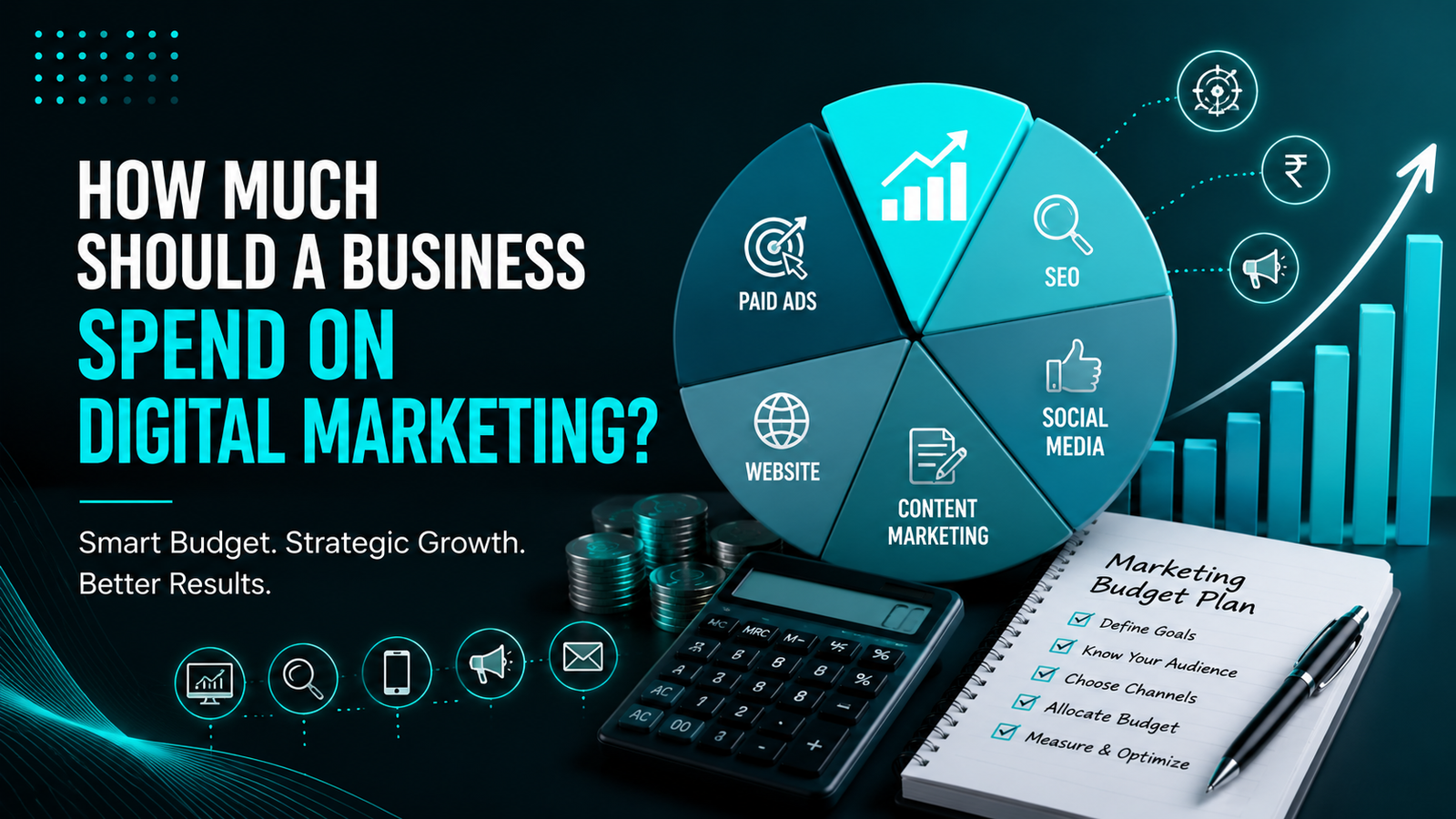
One of the first questions every business owner asks before investing in online promotion is, “How much should I spend on digital marketing?”
The answer isn’t the same for every business.
A startup looking to build brand awareness has different marketing needs than an established company aiming to generate qualified leads or scale nationwide. Similarly, a local service provider doesn’t require the same budget as an eCommerce brand competing across India.
Rather than focusing on spending the least, businesses should focus on investing wisely. A well-planned digital marketing strategy can generate consistent leads, increase brand visibility, and deliver measurable returns on investment.
In this guide, we’ll explore how businesses can determine the right digital marketing budget and where that budget should be allocated for maximum impact.
Why Digital Marketing Is an Investment, Not an Expense
Many businesses treat marketing as a monthly cost.
Successful businesses treat it as an investment.
When executed strategically, digital marketing helps you:
- Generate qualified leads
- Increase website traffic
- Build brand credibility
- Improve customer retention
- Boost sales and revenue
- Stay ahead of competitors
Instead of asking, “How much will marketing cost?” consider asking, “How much revenue can effective marketing generate?”
There’s No One-Size-Fits-All Budget
Your ideal marketing budget depends on several factors, including:
- Business size
- Industry competition
- Revenue goals
- Geographic target
- Customer lifetime value
- Current brand awareness
- Sales cycle
- Marketing objectives
For example, a local restaurant and a SaaS company will have completely different marketing priorities.
A Common Rule: Allocate 5%–15% of Revenue
Many marketing experts recommend allocating between 5% and 15% of annual revenue toward marketing.
Here’s a general guideline:
| Business Stage | Suggested Marketing Budget |
|---|---|
| New Startup | 10–15% of projected revenue |
| Growing Business | 8–12% of revenue |
| Established Business | 5–10% of revenue |
| Aggressive Expansion | 15–20% or more |
These percentages are not fixed rules but useful benchmarks. Businesses entering highly competitive markets may need to invest more initially to build visibility.
Factors That Influence Your Marketing Budget
1. Your Business Goals
Ask yourself:
- Do you want more website traffic?
- Are you looking for qualified leads?
- Do you want to increase online sales?
- Is brand awareness your primary objective?
Different goals require different strategies and budgets.
2. Industry Competition
Some industries are significantly more competitive than others.
For example:
- Real Estate
- Education
- Healthcare
- Legal Services
- Insurance
- Finance
Keywords in these industries often have higher advertising costs, making larger budgets necessary.
3. Location
A local business targeting one city generally spends less than a company serving customers nationwide or internationally.
For example:
A digital marketing agency targeting Kolkata competes differently than one targeting businesses across India.
4. Customer Lifetime Value
If a customer generates recurring revenue over several years, spending more to acquire that customer often makes financial sense.
For example:
A business earning ₹5,00,000 from one client can justify a much higher acquisition cost than a business selling a ₹500 product.
Where Should Your Digital Marketing Budget Go?
An effective marketing budget isn’t spent on one channel alone.
Instead, it’s distributed across multiple activities.
Search Engine Optimization (SEO)
SEO helps your website attract organic traffic from search engines.
Benefits include:
- Long-term visibility
- Consistent lead generation
- Higher credibility
- Reduced dependence on paid advertising
SEO typically requires continuous investment rather than one-time optimisation.
Google Ads
Google Ads allows businesses to reach potential customers actively searching for products or services.
Ideal for:
- Immediate leads
- High-intent customers
- Local businesses
- Seasonal campaigns
Advertising budgets vary depending on industry competition and keyword costs.
Social Media Marketing
Platforms such as Facebook, Instagram, LinkedIn, and YouTube help businesses:
- Build brand awareness
- Engage audiences
- Generate enquiries
- Promote products and services
Organic content combined with paid campaigns often delivers the best results.
Website Development & Optimization
Even the best marketing campaigns struggle if the website fails to convert visitors.
Budget should include:
- Website improvements
- Landing pages
- Speed optimisation
- Mobile responsiveness
- User experience enhancements
Your website should function as your best salesperson.
Content Marketing
High-quality content helps businesses:
- Improve SEO
- Build authority
- Educate customers
- Increase engagement
- Support social media campaigns
Content includes:
- Blogs
- Videos
- Infographics
- Case studies
- Email newsletters
Marketing Tools
Many businesses overlook software expenses.
These may include:
- CRM platforms
- Email marketing software
- Analytics tools
- Keyword research tools
- Automation platforms
- Heatmap and user behaviour tools
These tools provide valuable insights that improve campaign performance.
How to Measure Whether Your Budget Is Working
Spending money isn’t enough.
Businesses should track key performance indicators (KPIs), such as:
- Website traffic
- Lead generation
- Cost per Lead (CPL)
- Conversion Rate
- Customer Acquisition Cost (CAC)
- Return on Ad Spend (ROAS)
- Return on Investment (ROI)
Regular reporting helps identify which marketing activities generate the highest returns.
Common Budgeting Mistakes
Many businesses struggle not because they spend too little—but because they spend inefficiently.
Common mistakes include:
Relying on One Marketing Channel
Depending solely on Google Ads or social media can limit long-term growth.
A diversified strategy is more sustainable.
Expecting Instant Results
SEO, branding, and content marketing require patience.
Businesses often stop too early before seeing meaningful results.
Ignoring Analytics
Without data, businesses can’t identify what’s working.
Always monitor campaign performance and optimise regularly.
Choosing the Cheapest Agency
Low-cost marketing often leads to poor-quality leads, weak strategy, and inconsistent execution.
Value should always outweigh price.
How Small Businesses Can Start
If you’re just beginning your digital marketing journey, focus on building a strong foundation.
Start with:
- A professional website
- Google Business Profile
- Basic SEO
- Social media presence
- Google Ads for high-intent searches
- Regular content creation
As your business grows, expand into advanced campaigns, automation, remarketing, and brand-building initiatives.Final Thoughts
There is no universal answer to how much a business should spend on digital marketing. The right budget depends on your goals, industry, competition, and growth ambitions.
Rather than chasing the lowest possible spend, focus on building a strategy that delivers measurable business outcomes. A balanced investment across SEO, paid advertising, content, social media, and website optimisation creates a strong foundation for sustainable growth.
Digital marketing isn’t about spending more—it’s about spending smarter. With clear objectives, the right expertise, and consistent optimisation, businesses of all sizes can achieve meaningful results and build a lasting competitive advantage.